How to plan, budget and enjoy your first exhibition
At the start of 2026 one of my art friends (Tessa Taylor, oil painter) sent me a message asking if I would be open for a collaboration at the new art space in our town. Sounds great! I jumped at the chance and figured that September was ‘ages away’ and we had loads of time to prepare.
A month after the exhibition, I wanted to share some of my reflections, things I’ve learnt, and tips I can share after the exhibition.
1. Plan plan plan
When we started talking about the exhibition, I had no idea how much planning would be involved. I had taken part in local exhibitions before but for those the most planning I had to do was deciding which paintings to take with me.
For this opportunity we were working with a local arts organisation, We Make Wycombe, who were incredibly helpful and gave us a few starting points to help structure our planning:
What makes your exhibition unique?
How will you measure success?
How will the exhibition benefit you?
Questions like this helped clarify our ideas and think about what was important to our proposal.
One of the other things we had to do was to put together a budget plan to secure the funding. This was an incredibly valuable exercise as we realised that insurance, workshop materials, and marketing quickly added up. Of course some of the numbers changed a little by the end of the exhibition, but without doing this budgeting in advance, I think we could have quite easily overspent on materials, or underpaid ourselves for our time too.
On the other side, there are areas where planning a lot can’t help. We spent approximately no time at all planning how to hang our paintings in the exhibition space. Thank goodness we didn’t - on set-up day it was far easier to put all the paintings on the floor and go by gut feeling.

All set up and ready for visitors!
Key takeaway: save your planning energy for budget, concept and marketing.
2. Step out of your comfort zone - and enjoy it!
One of the things we were contracted to do as part of the exhibition was to engage the local community by running some form of open workshop for the public to attend. Having no experience with teaching art or running sessions with the public, this felt way out of my comfort zone and just a little bit terrifying. After putting off thinking about it for a while, we reached out to some more experienced artist friends and they gave some valuable words of encouragement and ideas on how to make it a success. The advice: Keep it simple, keep it small, and have fun with everyone! It ended up being one of my favourite parts of the week, having a small group of artists sitting round a table trying out gouache for the first time.
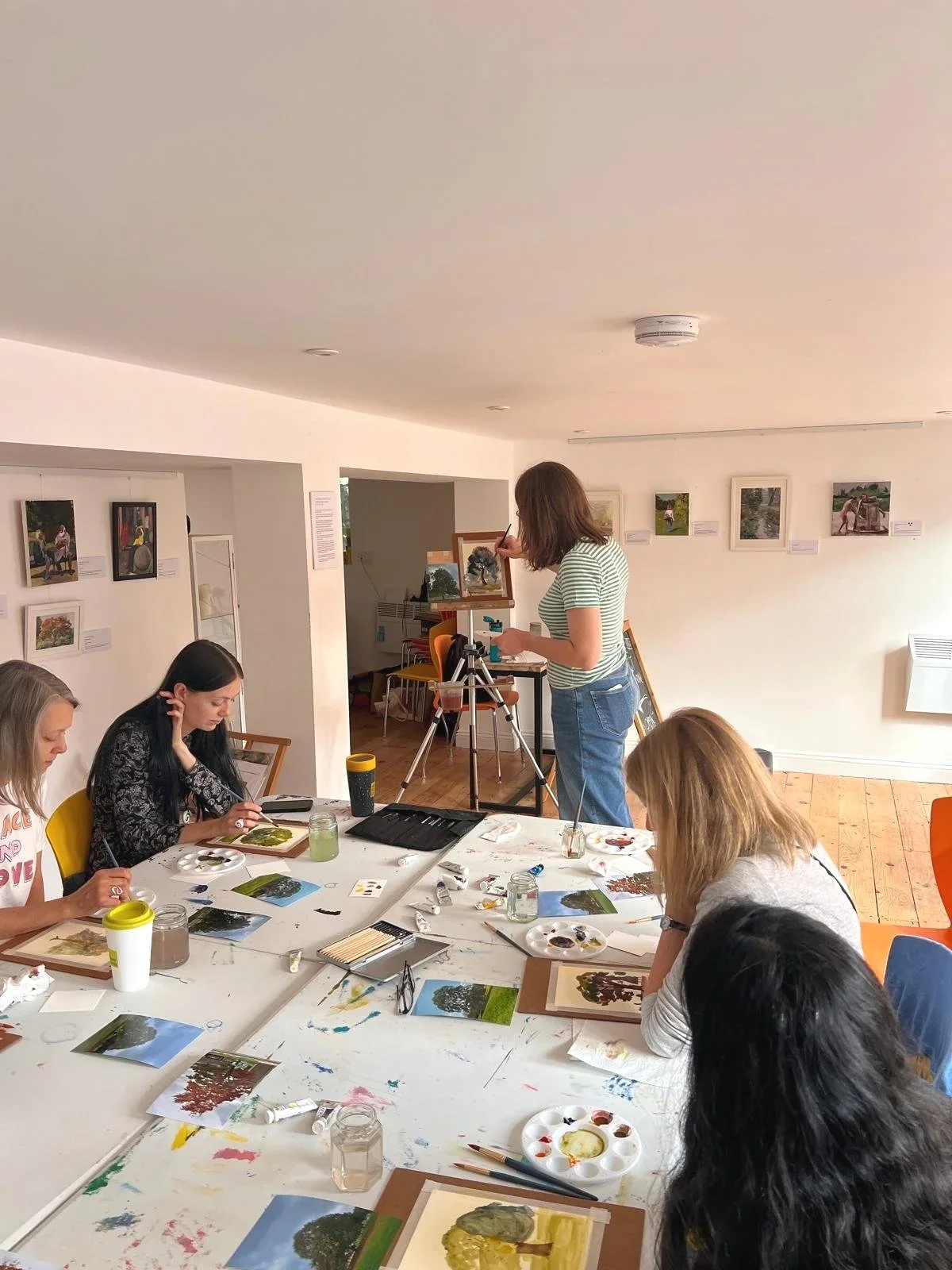
An introduction to gouache - workshop
The workshop was probably the biggest step out of my comfort zone during the exhibition week, but hosting the private view, advertising the exhibition on local radio, and speaking to visitors about my art practice were all hugely valuable opportunities that built up my confidence as an emerging artist as well.
Key takeaway: say ‘yes’ to new opportunities, ask for help, and enjoy the journey.
3. Take time to reflect
Having spent a full week taking care of the exhibition, the part where we had to take all the paintings down and clear out of the space felt a bit sad. Is there such thing as post-exhibition blues? Having spent most of the year preparing for and looking forward to the week, it felt a bit like ‘what now?’.
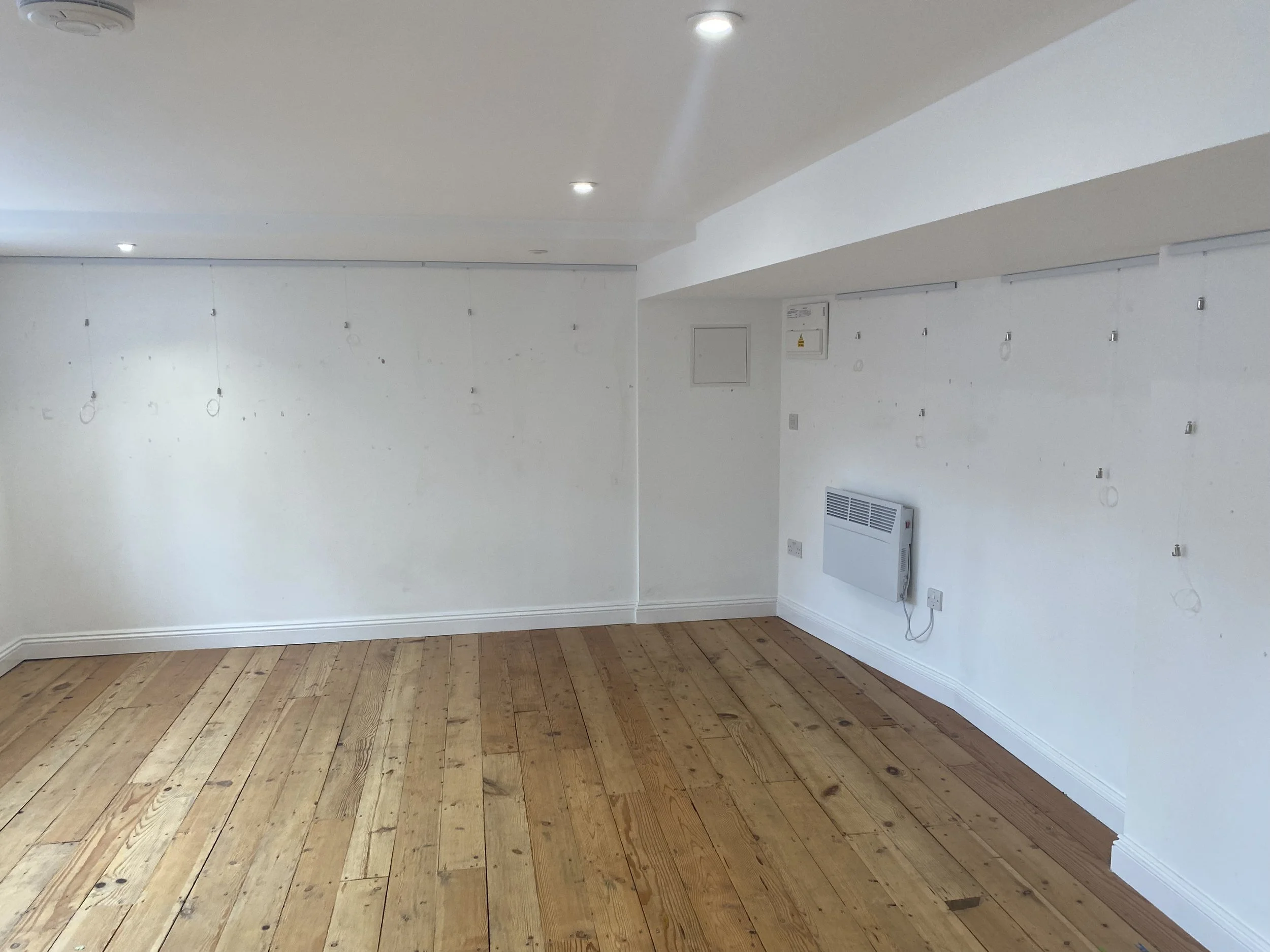
All tidied up and ready for the next artists
The space funding our exhibition encouraged us to fill out a feedback form in the days after the exhibition. Thinking about (and actually writing down) what had gone well, what could have been improved, and what new opportunities had arisen was a great way to clarify my next steps.
Key takeaway: Before moving straight onto new things, take some time to reflect and write down your thoughts and feelings on the exhibition.
Acknowledgements: Tessa Taylor (Art by Tessa), We Make Wycombe (Empowering Our Community in High Wycombe)